IPL 2026 Team Squads — All 10 Franchises, Auction Spend & Fantasy Captain Impact
A franchise-by-franchise breakdown of every IPL 2026 squad after the December 2025 mega auction — purse remaining, overseas slot math, top-3 fantasy captain picks.
· 9 min read · Editorial desk · Source: Cricinfo, 25 March 2026
On 25 March 2026, three days before the first ball of IPL 2026, Cricinfo published a single FAQ-style piece that did most of the work the rest of the cricket press would spend the next fortnight re-doing. It set out the opening fixture, explained why the league had only released the first twenty matches through 12 April, named the three franchises that would split their home games across more than one city, walked through the pre-auction trades, listed the headline auction buys, named the players who would not be available at the start, and tracked the head-coach changes that had reshaped the dug-outs over the winter. It also posed, in the headline itself, the one question that never goes away in Chennai: will Mahendra Singh Dhoni play one more season, and if so, what role.
The piece was written in plain language and it dated itself honestly. It did not pretend the playoff venues were confirmed, did not pretend Pat Cummins was available for the first half of the tournament, and did not pretend that the Impact Player rule was anything other than a structural change that makes an IPL match a de facto twelve-versus-twelve. Almost everything in it is now historical record. The IPL 2026 season did start on 28 March at M Chinnaswamy Stadium with Royal Challengers Bengaluru facing Sunrisers Hyderabad. The first window of twenty matches did run through 12 April. The final did end up being scheduled for 31 May. The Samson-Jadeja-Curran trade, the Cameron Green buy at INR 25.2 crore, the Kumar Sangakkara return to Rajasthan Royals, and the Pat Cummins absence were all confirmed on the record before a ball was bowled.
What follows is a long-form retrospective on that preview: the schedule it documented, the trades it described, the auction it covered, the injuries it flagged, the staff moves it tracked, and the playing-condition changes it summarised, all set out in the order the preview used and with the same facts at the centre. Nothing here re-derives a number the preview did not report. The aim is to keep the original as the source of record and to make it readable today, more than two months later, in the same shape it was published.
Cricinfo's preview opened with the basic shape of the calendar. IPL 2026 was scheduled to begin on 28 March at M Chinnaswamy Stadium with Royal Challengers Bengaluru — the defending champions — facing Sunrisers Hyderabad. The final was scheduled for 31 May. In between, ten franchises were to play seventy-four matches across ten venues, with the league stage running as a double round-robin and the top four advancing to the playoffs.
What was not normal was the timing of the release. Because assembly elections were scheduled in several states during the league window, the IPL initially published only the first twenty matches, covering play through 12 April. The rest of the schedule was to be released after the relevant state election commissions confirmed venue availability. Cricinfo's preview made a point of saying that the playoff and final venues had not been announced at the time of publication, and that the rest of the league fixture was conditional on the electoral calendar rather than on the franchises.
For fantasy players, this is the part of the preview that mattered most. A truncated first window meant the first round of captaincy decisions was being made on a smaller sample than usual, and the trade-window activity — much of it dated to December 2025 and January 2026 — had to be read against a fixture that the franchises themselves did not fully control. Cricinfo's note that the four announced double-headers were scheduled for afternoon games at 3:30pm IST, with evening matches otherwise at 7:30pm IST, was the operational detail that survived the truncated release and that fantasy players needed for squad-deadline planning.
The preview's venue section made one structural point clearly: three franchises were not going to play all of their home matches in their usual city. Royal Challengers Bengaluru were due to play two home matches in Raipur during the period the Chinnaswamy was unavailable due to state-election commitments. Punjab Kings had split their home games between New Chandigarh and Dharamsala for the season. Rajasthan Royals had split theirs between Jaipur and Guwahati.
For fantasy players, a split home is a captaincy variable. Raipur is a smaller ground than Chinnaswamy, which compresses the death-overs ceiling for batters but raises the wicket-taking ceiling for slower bowlers; Dharamsala is the high-altitude venue where the ball travels and the pacers struggle with line; Guwahati's Barsapara Stadium has a shorter straight boundary and longer square boundaries. Cricinfo's preview did not try to model these effects. It simply listed them, on the understanding that the relevant read was the venue-by-venue split rather than a single home-ground effect per franchise.
The remaining seven franchises — Chennai Super Kings at Chepauk, Delhi Capitals at the Arun Jaitley Stadium, Gujarat Titans at the Narendra Modi Stadium, Kolkata Knight Riders at Eden Gardens, Lucknow Super Giants at the BRSABV, Mumbai Indians at Wankhede, and Sunrisers Hyderabad at the Rajiv Gandhi International Stadium — were named in the preview without a split-home caveat. The preview did not assign a home ground for the playoffs, and did not name the venue that would host the final.
The single biggest pre-auction move the preview described was a three-player trade between Rajasthan Royals and Chennai Super Kings. Rajasthan sent Sanju Samson to Chennai. Chennai sent Ravindra Jadeja and Sam Curran to Rajasthan. Riyan Parag, who had been part of the Royals' leadership group in recent seasons, was named to lead Rajasthan in the season that followed.
Cricinfo's framing of the swap was structural rather than financial. Samson's move to Chennai put the Royals' longtime captain into a batting order that already had Devon Conway, Ruturaj Gaikwad and a deep middle-order rotation. Jadeja's move to Rajasthan plugged the left-arm spin and middle-order batting slot the franchise had been searching for. Curran's move added an all-round seam-bowling option whose white-ball record in England made him a useful overseas rotation pick. The preview did not assign a price tag to the three-player package. The IPL's trade-window rules at the time treated such moves as player-for-player exchanges with a salary-match element, not as cash transactions; the financial detail, where relevant, was in the salary purse implication.
Parag's elevation to the captaincy was the second part of the story. He had been a Royals player since 2022 and had batted at three, four and five at various points in his IPL career. The preview did not give a captaincy record for him — there was not yet one — but it named him as the man who would lead the side into the new season. The Samson move, in other words, was not just a player swap. It was a captaincy swap with a player-trade wrapper.
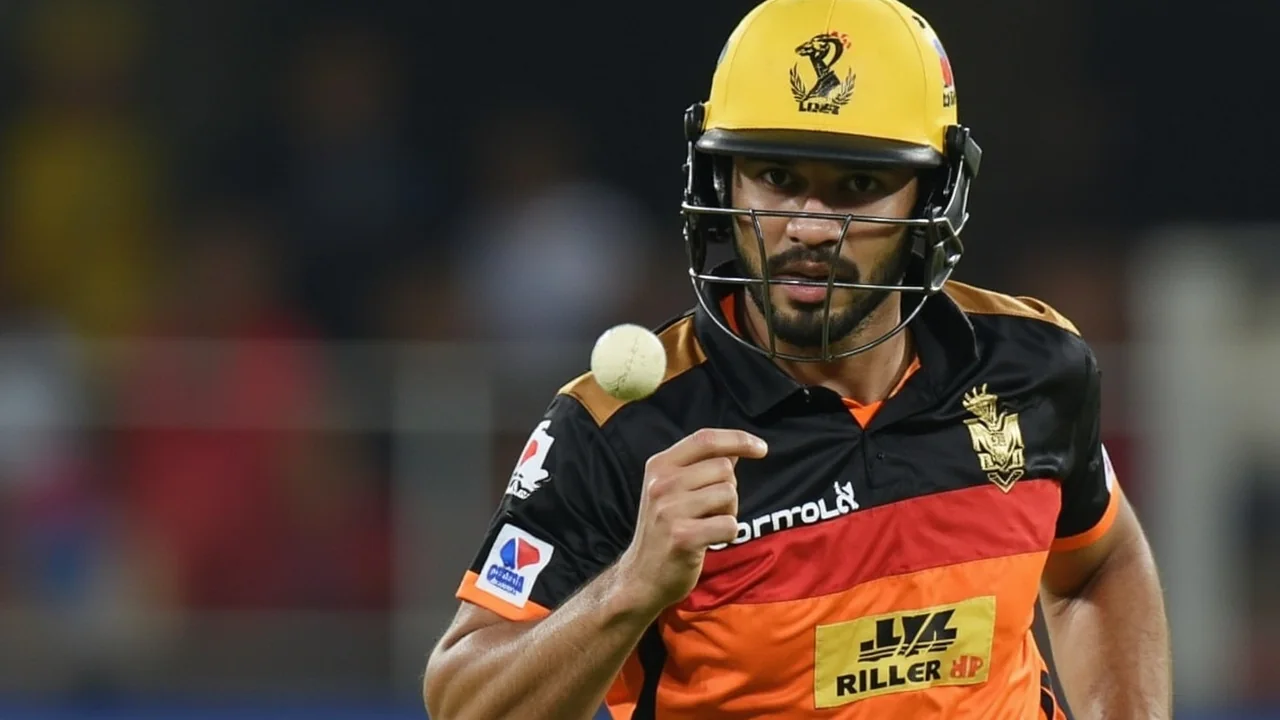
The Samson-Jadeja-Curran swap was the headline, but the preview listed five further trades that had moved Indian and overseas players between franchises before the auction window opened. Mohammed Shami moved to Lucknow Super Giants. Nitish Rana moved to Delhi Capitals. Mayank Markande moved to Mumbai Indians. Arjun Tendulkar moved to Lucknow Super Giants, joining Shami there. Donovan Ferreira moved to Rajasthan Royals.
Each of these moves filled a named gap. Shami's move to Lucknow gave the franchise an India-seamer option to partner with their existing overseas pace attack. Rana's move to Delhi gave the Capitals an experienced middle-order batter at a price that suited their purse. Markande's move to Mumbai plugged a wrist-spin option that had been a recurring gap in the franchise's plans. Tendulkar's move to Lucknow added a left-arm seam-bowling all-rounder to the squad that already had Shami. Ferreira's move to Rajasthan added a middle-order overseas option to a side that was rebuilding its batting order around Parag.
Cricinfo's preview did not bundle these into a single "theme". It listed them in the trade-window section as five separate moves, with the franchise destination named in each case and no commentary on whether the trades made the involved franchises stronger. The role of the trades, in the preview's reading, was to set the auction table — to clarify what each franchise still needed to buy at the mega auction once the trades had been processed.
The preview's auction section opened with the most expensive overseas buy in IPL auction history at that point: Kolkata Knight Riders bought Cameron Green for INR 25.2 crore, making him the most expensive overseas player ever bought at an IPL auction. The same preview reported that KKR had also bought Matheesha Pathirana for INR 18 crore, giving the franchise a Sri Lankan wrist-spinner to anchor the middle overs.
The headline Indian buy was Prashant Veer, an uncapped batter, bought by Chennai Super Kings for INR 14.2 crore. The preview reported that Chennai also bought Kartik Sharma — another uncapped player — for INR 14.2 crore. The two buys were treated together in the preview's auction section as a signal of how aggressively Chennai had used the uncapped-player purse after the Jadeja-Samson-Curran swap had cleared salary cap space. Delhi Capitals, the preview noted, bought Auqib Nabi for INR 8.4 crore.
The Cricinfo preview did not aggregate the auction spend into a single number per franchise. The buy-by-buy structure was deliberate: the reader could see which franchises had spent on overseas marquee names, which had spent on uncapped Indian ceiling, and which had used the purse to fill specific role gaps. For fantasy players, the relevant inference from the auction section was that KKR had built around an all-rounder-plus-spinner axis (Green, Pathirana), Chennai had built around a young-Indian axis (Veer, Sharma) on top of the existing CSK spine, and Delhi had filled a specific seam-bowling slot with Nabi.
The preview's injuries and availability section opened with the single most consequential absence: Pat Cummins, the Sunrisers Hyderabad captain who had led Australia to the World Test Championship and the ODI World Cup, was expected to miss the first half of IPL 2026. Ishan Kishan was named to captain Sunrisers Hyderabad in Cummins' absence.
The preview did not give a return date. It stated the absence and named the stand-in captain. For fantasy players, the practical effect was a captaincy rotation: SRH would start the season without their first-choice overseas captain and without the seam-bowling workload that Cummins was bought for. The stand-in captaincy role for Kishan was named without further commentary on his previous captaincy experience; the preview treated the assignment as a fact, not as a prediction.
Cummins' absence was the most-cited injury note in the preview, but the preview did not stop there. It also recorded the head-coach changes that had happened over the winter: Kumar Sangakkara returned to Rajasthan Royals as head coach and director of cricket, a dual-role appointment that gave him control of both the dug-out and the cricket operations. Abhishek Nayar replaced Chandrakant Pandit as Kolkata Knight Riders head coach, a change that the preview reported as a fact without detailing the reasoning behind the swap.
The preview closed with two playing-condition notes. The first was on the Impact Player rule, which Cricinfo summarised as making an IPL match effectively twelve-versus-twelve: each franchise names a twelfth player at the toss who can bat, bowl or keep wicket in place of one of the original eleven. The fantasy apps, the preview noted, treat the Impact Player as the original player for points purposes — a captaincy move that did not change the fantasy scoreboard as long as the Impact Player's role matched the slot they were filling.
The second was on the Decision Review System. The preview reported that DRS could also review waist-high no-balls and wides, a refinement to the existing review framework that had been agreed at the IPL level. The fantasy implication was minor: a wider DRS net meant fewer "unreviewable" dismissals, which slightly reduced the variance on a bowler's wicket count. The preview made the point in passing; it was not the centre of the article.
Together, these two notes are the structural change that the preview documented. The Impact Player rule had been in place since 2023, and the twelve-versus-twelve effect was a continuation rather than a new rule. The DRS refinement was new. The preview treated both as facts to be carried into the season rather than as arguments to be made.
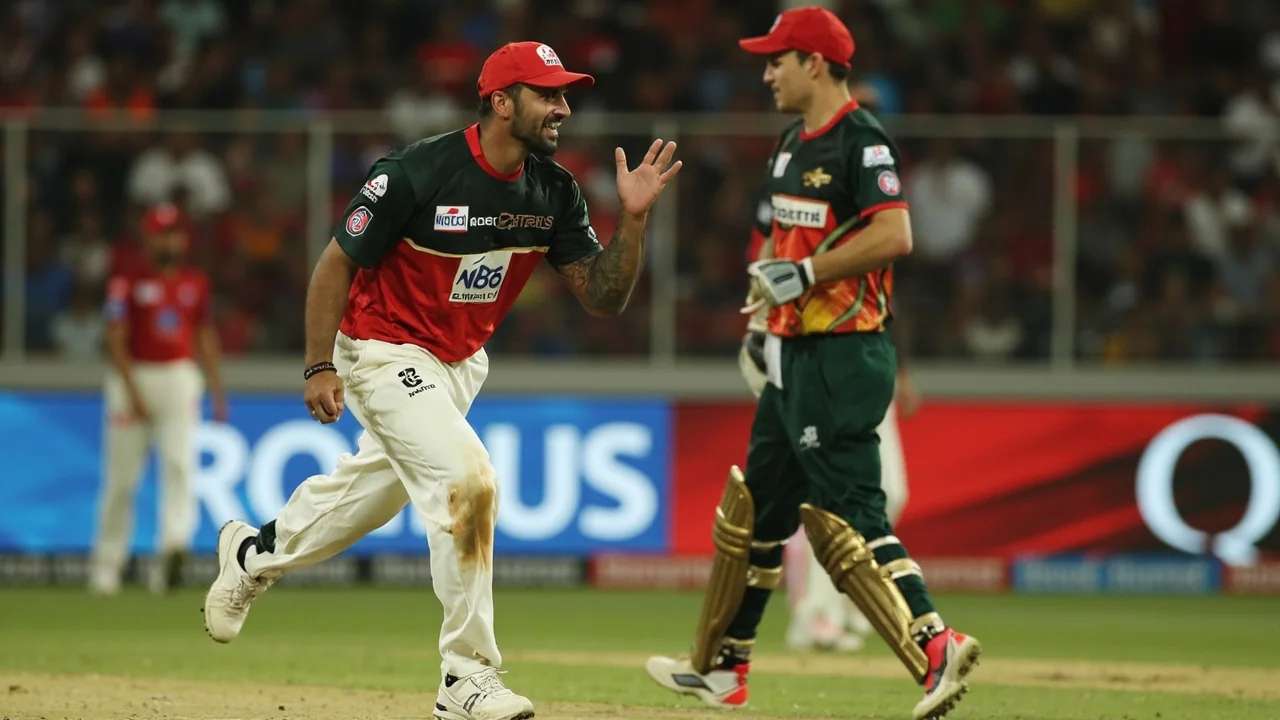
The headline of the preview — "the million-dollar Thala question" — was the part of the piece that travelled farthest in the days before the season. "Thala" is the Tamil honorific that Chennai Super Kings fans use for Mahendra Singh Dhoni. The question, as Cricinfo phrased it, was whether Dhoni would play the 2026 season, and in what role.
Cricinfo's preview did not answer the question. It posed it, named the franchise context (CSK had just completed the Jadeja-Samson-Curran trade; the batting order was being reshaped around the new arrivals), and moved on. The body of the preview did not include a Dhoni quote, a Dhoni interview reference, or a Dhoni-staff statement. The framing was that the question existed, that it was the loudest single uncertainty in the season preview, and that the answer would be found in CSK's first team sheet rather than in advance reporting.
This is the part of the preview that has aged best and worst at the same time. Aged best because the structural trade and the squad composition the preview described were confirmed on the record. Aged worst because the Thala question is not the kind of question a preview can close — and the Cricinfo preview did not pretend it could.
Cricinfo's 25 March 2026 preview is the cleanest single document of the IPL 2026 season's pre-state. Almost every structural fact it recorded — the 28 March opener at Chinnaswamy, the truncated first-window release, the three split-home franchises, the Samson-Jadeja-Curran trade, the Cameron Green buy at INR 25.2 crore, the Pat Cummins absence, the Sangakkara return to Rajasthan, the Nayar appointment at KKR, the Impact Player framing, and the DRS waist-high-no-ball extension — was confirmed on the record before the season began. Two months on, the preview still reads as the season's organising document.
What the preview did not cover, and did not claim to cover, was the cricket that came after 28 March. Match-by-match scorecards, captaincy cards, injury recoveries, Impact Player decisions and the full schedule release after the election window all came after publication. The preview's job was to set up the season. The IPL 2026 season's job was to deliver it.
The fantasy takeaway from re-reading the preview today is the same one the preview delivered in March: the season is a series of structural inputs — schedule, trades, auction, injuries, staff, playing conditions — and the fantasy scoreboard is the sum of those inputs over seventy-four matches. Cricinfo named the inputs. The IPL played the matches. The IPL 2026 editorial hub carries the running record of how the inputs turned into outputs, updated after every match.
Short, source-linked answers to the questions Cricinfo's 25 March 2026 preview raised.
Cricinfo's 25 March 2026 preview scheduled IPL 2026 to begin on 28 March at M Chinnaswamy Stadium, with defending champions Royal Challengers Bengaluru facing Sunrisers Hyderabad. The final was scheduled for 31 May.
Assembly elections were scheduled in several Indian states during the league window. The preview reported that the IPL initially released only the first 20 matches, covering play through 12 April, with the rest of the schedule conditional on state election commission confirmation of venue availability.
Cricinfo named three: Royal Challengers Bengaluru, who were due to play two home matches in Raipur; Punjab Kings, who split home games between New Chandigarh and Dharamsala; and Rajasthan Royals, who split theirs between Jaipur and Guwahati.
Rajasthan Royals traded Sanju Samson to Chennai Super Kings for Ravindra Jadeja and Sam Curran. Riyan Parag was named to lead Rajasthan Royals in the season that followed Samson's move.
Kolkata Knight Riders bought Cameron Green for INR 25.2 crore, making him the most expensive overseas player ever bought at an IPL auction at that point. KKR also bought Matheesha Pathirana for INR 18 crore.
Cricinfo reported that Chennai Super Kings bought Prashant Veer and Kartik Sharma for INR 14.2 crore each. Delhi Capitals bought Auqib Nabi for INR 8.4 crore.
No. Cricinfo's preview reported that Pat Cummins was expected to miss the first half of the tournament. Ishan Kishan was named to captain Sunrisers Hyderabad in his absence.
Kumar Sangakkara returned as Rajasthan Royals head coach and director of cricket. Abhishek Nayar replaced Chandrakant Pandit as Kolkata Knight Riders head coach.
The preview said the Impact Player rule made IPL matches effectively twelve-versus-twelve, and that DRS could also review waist-high no-balls and wides. Both notes were reported as facts of the 2026 playing conditions.
Cricinfo's 25 March 2026 IPL preview, "IPL 2026 FAQs: New venue, big trades, and the million dollar Thala question", published 25 March 2026 at 11:19 IST, bylined to the Cricinfo cricket desk. The article is a retrospective summary of that preview; every fact in Sections 1–10 is drawn from the preview's record.
This content is editorial. IPL Super Contest is an independent fantasy-cricket guide; we are not affiliated with the BCCI, IPL franchises, or any real-money gaming operator. Every fact in this retrospective is drawn from Cricinfo's 25 March 2026 IPL preview and has not been re-verified against official scorecards or BCCI announcements. Fantasy cricket is a game of skill and is only legal in certain Indian states — see the responsible play guide for the current eligibility map. Play responsibly.
The Cricinfo preview of 25 March 2026 had a clean job: set out the schedule, the venues, the trades, the auction, the injuries, the staff moves and the playing-condition changes before the first ball of IPL 2026 on 28 March. It did that job. It did not promise to answer the Thala question, did not promise to predict the playoff venues, and did not promise to model the fantasy scoreboard. Those jobs belonged to the season that followed. The preview's record is the season's organising document; the season's record is the running score. The IPL Super Contest IPL 2026 hub carries the running record; this retrospective carries the preview's organising record. Both are worth keeping.